Understanding Personality Assessments
The gigantiq platform uses personality assessments to help match professionals with roles, teams, and projects that align with their natural working styles. Here's what each assessment reveals:
DISC Profile
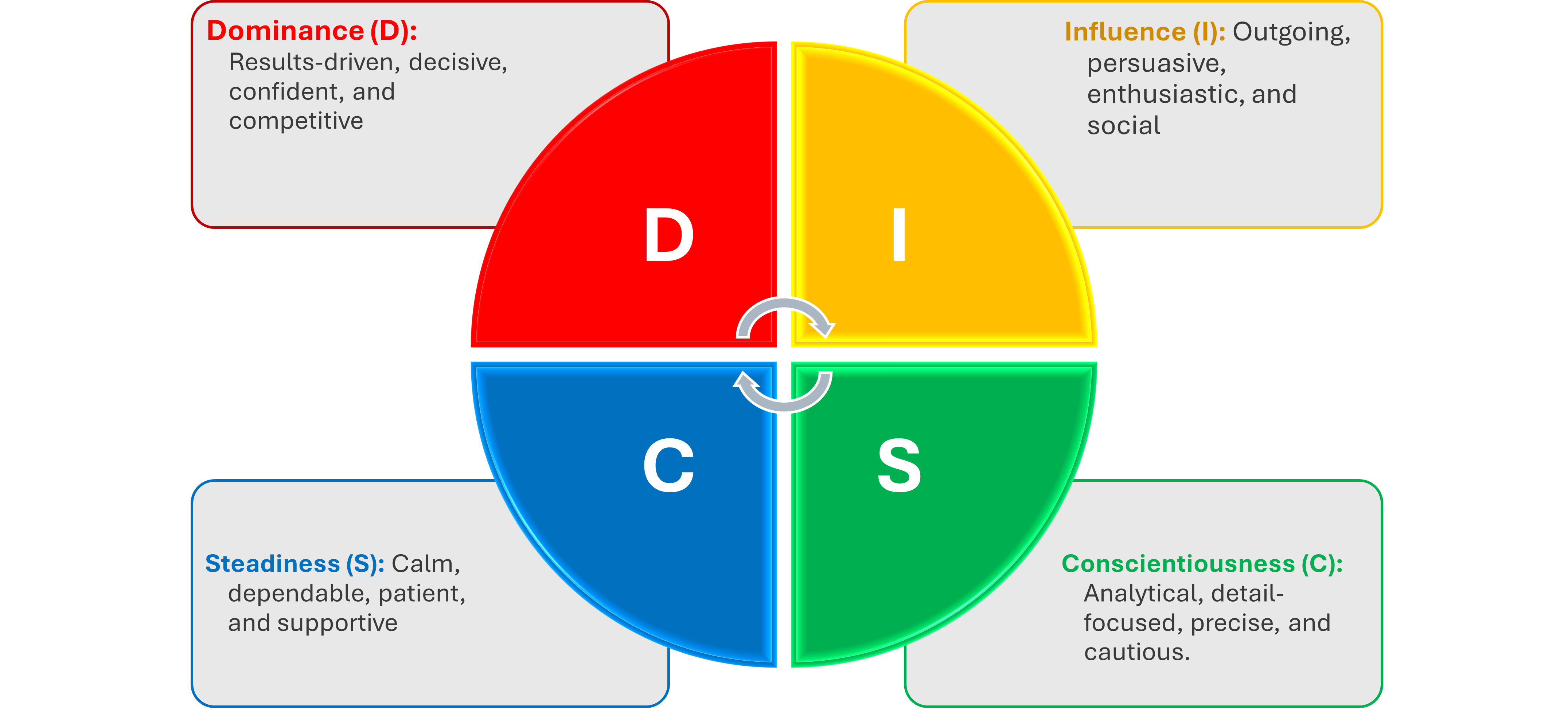
The DISC model categorizes behavior into four primary styles. It focuses on how individuals respond to challenges, influence others, pace themselves, and follow rules.
| Letter | Trait | Description | Common Behaviors |
|---|---|---|---|
| D | Dominance | How you respond to challenges and authority | Assertive, direct, decisive, results-driven |
| I | Influence | How you interact and influence others | Enthusiastic, social, persuasive, optimistic |
| S | Steadiness | How you respond to pace and change | Patient, loyal, team-oriented, consistent |
| C | Conscientiousness | How you respond to rules and procedures | Analytical, precise, detail-focused, quality-driven |
Example – Calculated
- Traits: Detail-oriented, analytical, organized
- Work Style: Prefers structure, values accuracy and quality, follows procedures
- Best Fit: Roles requiring precision, compliance, and methodical execution (e.g., Data Science, Engineering)
OCEAN Profile (Big Five)
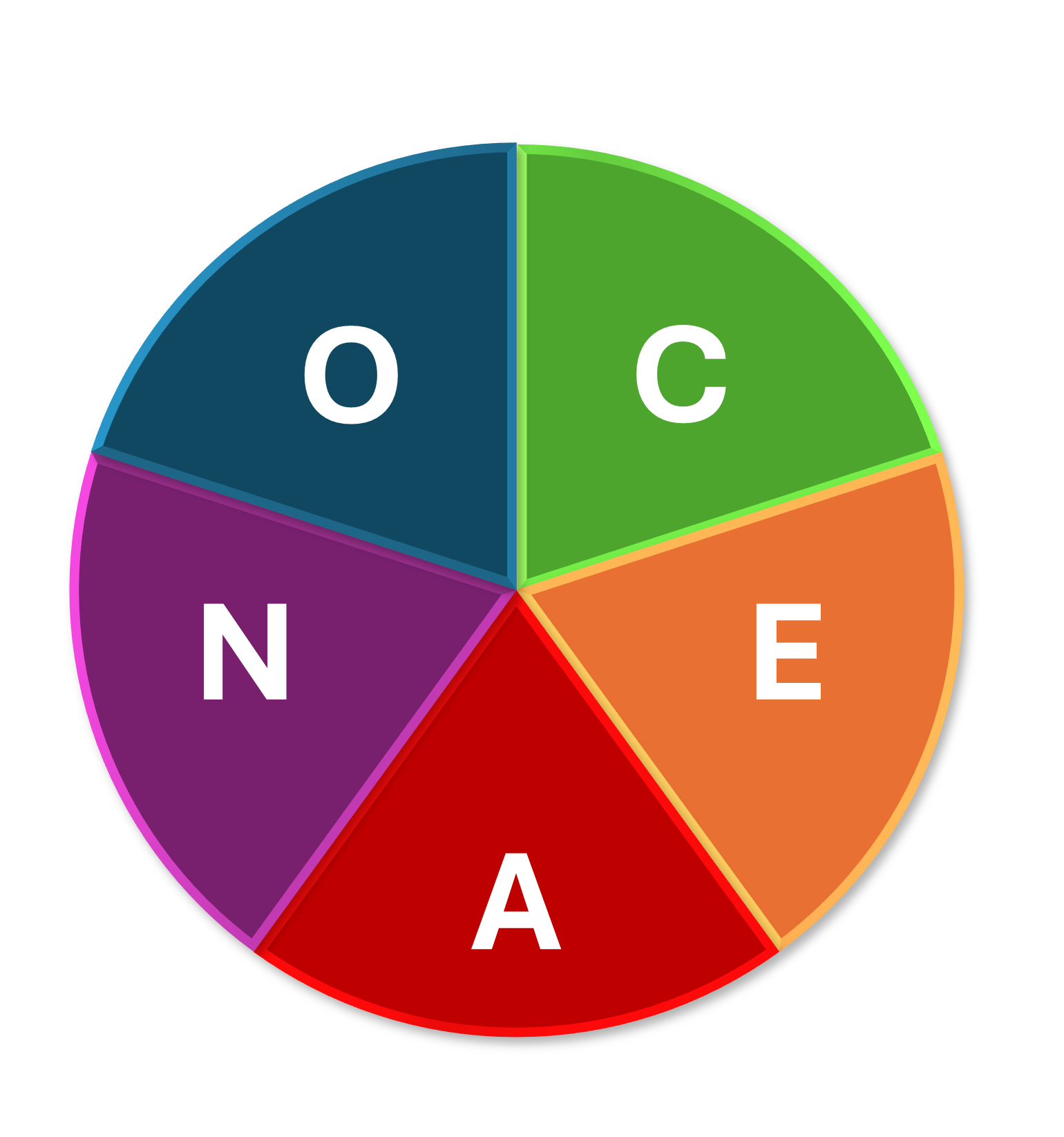
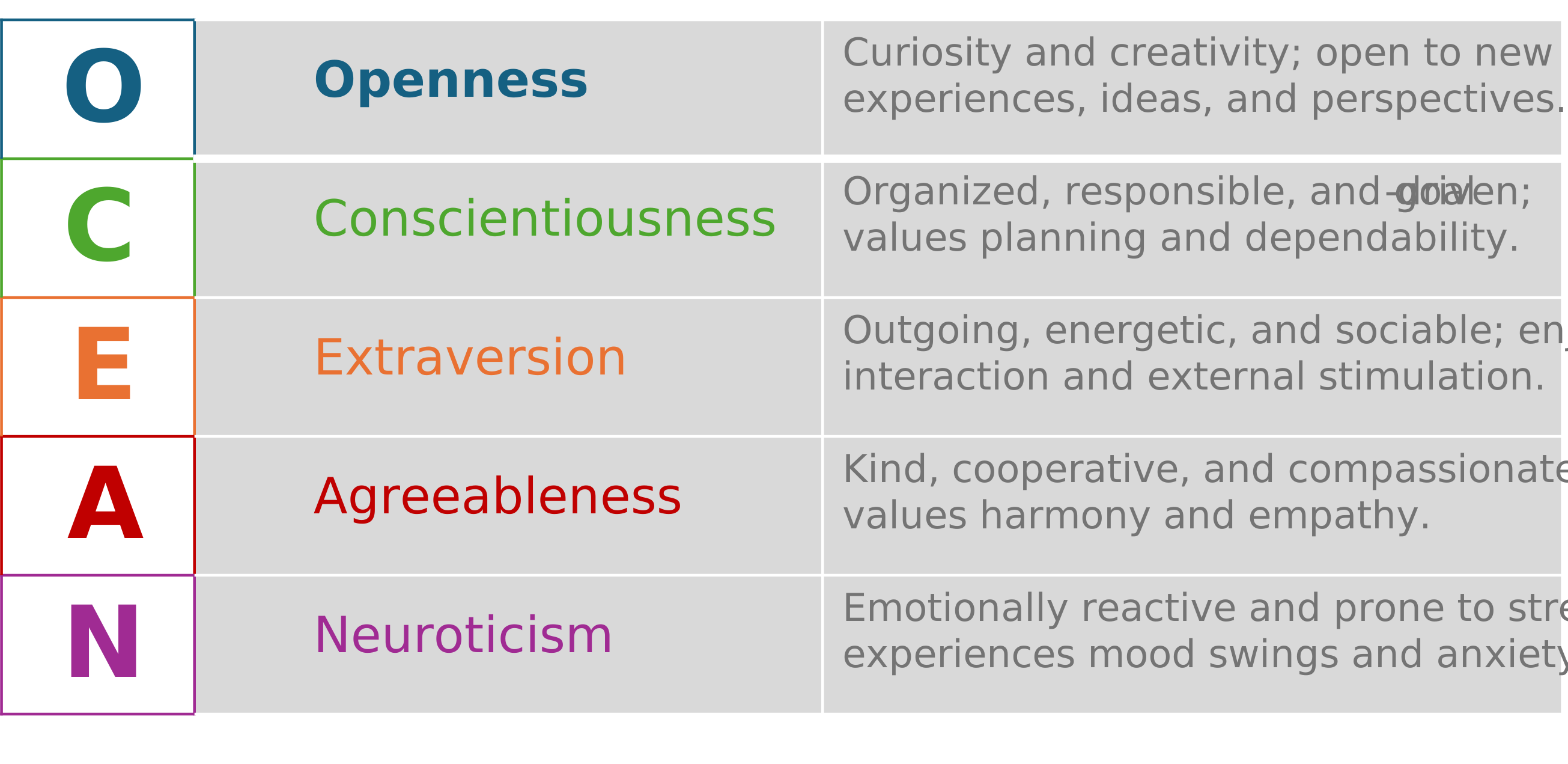
The OCEAN model (also known as the Big Five) assesses five broad dimensions of personality:
| Letter | Trait | Description | High Scorers Tend to Be... | Low Scorers Tend to Be... |
|---|---|---|---|---|
| O | Openness to Experience | Curiosity, creativity, openness to new ideas | Imaginative, open-minded | Practical, conventional |
| C | Conscientiousness | Self-discipline, organization, goal focus | Reliable, efficient, planful | Spontaneous, disorganized |
| E | Extraversion | Sociability, energy from interaction | Outgoing, energetic | Reserved, introspective |
| A | Agreeableness | Compassion and cooperation | Kind, empathetic, trusting | Skeptical, competitive |
| N | Neuroticism | Emotional stability vs. volatility | Sensitive, easily stressed | Calm, emotionally stable |
Example – Entrepreneur
- Traits: Energetic, spontaneous, curious
- Work Style: Thrives in dynamic environments, embraces innovation and risk
- Best Fit: Startups, innovation teams, product development
Behavioral Profile
-
Growth Mindset
Divergent Thinking
Digital Thinking
Teamwork & Collaboration -
Linear Mindset
Orthodox Thinking
Analogue Thinking
Lone Ranger -
Drive & Motivation
Agility & Adaptability
Creativity & Innovation
Design Thinking
Empathy & Compassion -
Considered & Steady
Structured & Predictable
Conventional & Careful
Analytical Thinking
Task Focused
Behavioral profiles describe how someone typically behaves in a work context—how they plan, communicate, and make decisions. These are often derived from patterns in DISC and OCEAN results.
Example Traits: Methodical Planner
- Structured Mindset: Prefers order, routines, and clear expectations
- Traditional: Values proven methods, may resist rapid change
- Analog Thinking: Focuses on tangible, real-world processes over abstract or digital-first approaches
How These Assessments Work Together
When combined, DISC, OCEAN, and Behavioral Profiles provide a 360° view of a professional:
-
DISC shows how they act.
-
OCEAN reveals why they act that way.
-
Behavioral how they behave in a work setting.